
Kuwait
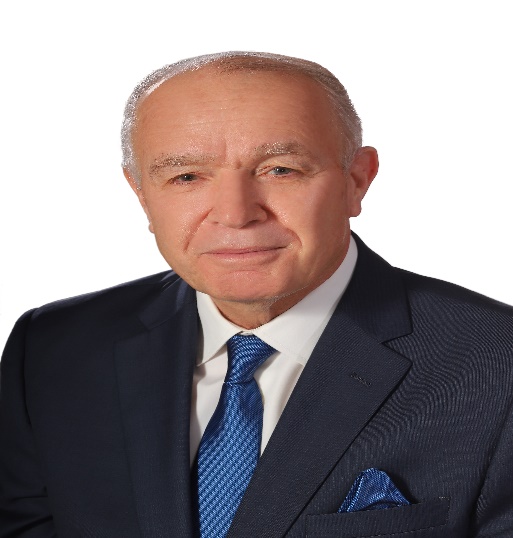
Isam Zabalawi
President, Australian University, Kuwait
A Futuristic University for the Arab World: Turning Artificial Intelligence, Creative Research, and Arab Talent into Economic Value
Isam Zabalawi
Australian University, Kuwait
Abstract
A Futuristic University for the Arab World: Turning Artificial Intelligence, Creative Research, and Arab Talent into Economic Value
Isam Zabalawi
Australian University, Kuwait
Artificial intelligence is reshaping economic systems, research practices, professional roles, and the capabilities expected of university graduates. For the Arab world, this transformation presents an opportunity to reconsider the university as a strategic driver of economic and social development. This keynote explores the defining characteristics of a futuristic Arab university and presents a ten-year vision for turning artificial intelligence, creative research, and Arab talent into practical value.
The presentation proposes a human-centered, AI-enabled, research-intensive, entrepreneurial, connected, inclusive, and responsible university. In this model, AI supports personalized learning, authentic assessment, interdisciplinary discovery, and more effective institutional decision-making. Faculty remain central as mentors, research leaders, learning designers, and guardians of academic judgment. Graduates combine disciplinary expertise with AI literacy, creativity, ethical responsibility, and the capacity for lifelong learning.
The keynote also examines how universities can organize creative research around Arab development priorities, including water security, sustainable energy, food systems, health, Arabic language technologies, advanced manufacturing, and sustainable cities. It considers the institutional pathways required to move research from publication to prototypes, enterprises, public policy, improved services, and wider societal benefit.
Particular attention is given to university-industry-government collaboration, campus-based experimentation, responsible AI governance, and regional cooperation. The proposed Arab University Innovation Network would connect complementary institutional strengths through shared infrastructure, datasets, research laboratories, graduate programs, and development missions.
The presentation concludes with a ten-year transformation roadmap that progresses from building institutional foundations to integrating capabilities and demonstrating economic and social value. It argues that the future Arab university should be evaluated through more than rankings and publication counts. Its true measure should be the opportunities it creates, the challenges it helps solve, and the future it makes possible for its students, economy, and society. Ultimately, the future of the Arab world will be shaped, in significant part, inside its universities.
Abstract
Educating Innovators Early: Undergraduate AI Research as a Foundation for National Economic Competitiveness
Isam Zabalawi, Helene Kordahji, Zahraa Abou Alloul, and Yamen Nissi
Australian University, Kuwait · Grenoble Ecole de Management & Scuola Superiore Sant’Anna
Artificial Intelligence (AI) is reshaping labor markets, and there is growing recognition that early exposure to AI research is essential for future prosperity and long-term economic competitiveness. While higher education systems have traditionally emphasized postgraduate research and commercialization, the process of translating ideas into market-ready solutions, far less attention has been given to undergraduate AI research and its potential role in building national competitiveness.
This chapter highlights undergraduate AI research as a foundational element in strengthening economic capacity over time. By engaging undergraduate students in authentic research experiences, universities can equip them with practical AI skills, enhance their ability to contribute to innovation, and enable them to address real-world challenges across multiple sectors. In this way, undergraduate research serves as an early pathway for developing a more innovation-ready and capable talent base.
The chapter presents a conceptual framework that connects undergraduate AI research to economic competitiveness through four dimensions: advanced skill development, creative problem-solving, entrepreneurial growth, and productivity improvement across sectors. It also examines the roles of students, faculty, university leadership, and government in embedding undergraduate AI research within higher education systems, with contextual examples from Kuwait and Jordan. Finally, it proposes measurable indicators and policy recommendations to support the structured integration of AI research across disciplines, positioning undergraduate research as a strategic lever for strengthening competitiveness in an AI-driven global economy.
Biography
Isam Zabalawi
Professor Isam Zabalawi is the President of the Australian University (AU). With a PhD in Electrical & Electronics Engineering from Leeds University. He specializes in analog and digital signal processing and communication techniques. His interests include the communication industry, information technology, technology transfer, and higher education development and reform. Professor Zabalawi is a well-published research scholar and before joining AU in 2017, he held senior positions including President of The Arab Academy for Banking & Financial Sciences, Minister of Higher Education and Scientific Research in Jordan, Chancellor of the University of Sharjah (UAE), Chairman of the Higher Education Accreditation Council of Jordan, founding minister for establishing the German-Jordanian University and founding President of the International University for Science and Technology (IUST) in Syria 2005-2007. He is a Fellow of Engineers Australia and has been awarded the Engineering Executive credentials. Additionally, he is a fellow of The Institution of Engineering and Technology (IET) - United Kingdom and he is a fellow with the European Federation of National Engineering Associations (FEANI). He served as a Higher Education Reform Expert (HERE) with the European Commission and Erasmus+ (Tempus) Office, Jordan.