Amman, Jordan
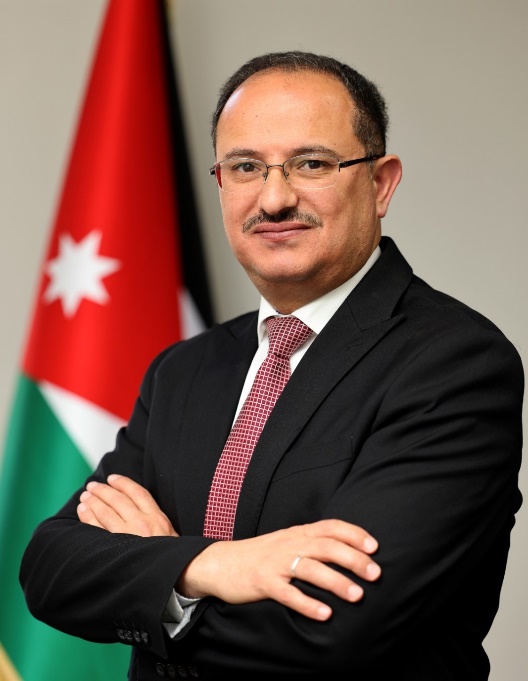
Ala’aldeen Al-Halhouli
President, German Jordanian University
Building AI Competence by Design: Frameworks, Recognition, and Leadership
Ala’aldeen Al-Halhouli
German Jordanian University (GJU), Jordan
Abstract
Building AI Competence by Design: Frameworks, Recognition, and Leadership
Ala’aldeen Al-Halhouli
German Jordanian University (GJU), Jordan
In the “AI-Human Skills Synergy Index”, Jordan is ranked in the “emerging” category. This reflects a trend observed throughout the Arab world: While awareness of the importance of AI is high, its translation into skills that graduates possess when entering the workforce is “still in its early stages”. National data supports this assessment. In the “Global Entrepreneurship Monitor: Jordan National Report 2024/2025,” employees’ awareness of the need for AI skills was rated at 6.0 on a ten-point scale, but their actual skills were rated at only 4.6, the use of AI in secondary education at 4.1, and the availability of AI training at 4.3!
Given this significant gap, the response must be comprehensive - both in terms of the curriculum and institutional structure. The German Jordanian University’s approach to integrating AI and future skills into the academic curriculum was based on three interconnected pillars: (i) a competency framework rather than a course catalog, (ii) recognition of the missing link between competencies and needs, and (iii) leadership as a driver.
GJU’s university-wide “Graduate Competency Framework” defines 25 competencies across five different clusters, one of which is dedicated to digital literacy and AI. The framework, which was developed using international data and standards, is structured in four progressive learning levels: Foundations, development, integration, and mastery - for both four-year and five-year degree programs. These competencies are integrated into existing courses and, whenever necessary, complemented through newly created parallel offerings.
Recognition is the second pillar. Identifying the right competencies is not enough if the labor market does not fully trust the credentials. Researchers from the GJU participated in a study that found that less than one-third of employers were familiar with micro-credentials; only 17% had used them in hiring. The majority of Jordanian senior executives considered regulatory ambiguities as a “severe barrier”. This hurdle is currently being overcome by the national framework for the recognition of micro-qualifications recently established by the Jordanian Accreditation and Quality Assurance Commission. To ensure satisfying this pillar, GJU has coordinated capacity-building programs to establish a credible recognition framework for short-cycle learning.
And since curriculum reforms fail when institutional leaders are unable to manage AI-driven change, GJU has developed two “Executive Micro-Credentials” for its leaders, based on UNESCO guidelines, the NIST’s AI Risk Management Framework, the EU AI Act, and the OECD’s AI Principles. These executive-level programs are based on the principle that institutional leaders complete programs that accommodate their time constraints in order to make decisions addressing real institutional challenges.
It is important to realize that AI-driven economic development in the Arab world cannot be achieved simply by adding artificial intelligence as just another subject to a static curriculum. It has a chance of success only if the curriculum is redesigned to focus on the skills that create jobs, rather than merely filling them.
Biography
Ala’aldeen Al-Halhouli
Ala’aldeen Al-Halhouli is the President of the German Jordanian University (GJU), in Amman, Jordan. He is a Professor of mechanical engineering at the GJU. He obtained a B.Sc. degree in Mechanical Engineering from Mu’tah University, Jordan in 1999, a M.Sc. degree in Mechanical Engineering from the University of Jordan in 2001, a Ph.D. degree in Mechanical Engineering from the University of Jordan in 2007 and a habilitation degree with Venia Legendi on microfluidics from the Mechanical Engineering Faculty at the “Technische Universität Braunschweig (TU BS)” in Germany in 2013. In 2005, Dr. Al-Halhouli received a DAAD scholarship to conduct his Ph.D. research in the area of viscous micropumps at the Institute of Microtechnology (IMT) of TU BS. Between 2007 and 2013, he was working as a research associate and lecturer at IMT. During the summer of 2014, he was a visiting scientist at Micro/Nanofluidic BioMEMS group, Massachusetts Institute of Technology (MIT), USA. He was a visiting Professor at the Nano lab of Tufts University, USA in June 2015 and has a visiting scholar status at IMT since Feb. 2013. He was the Dean of the School of Applied Technical Sciences and the Dean of the School of Applied Humanities and Languages at GJU. He served as vice president and then president of the Middle East University in Amman, Jordan between 2019-2021. Dr. Al-Halhouli believes on the concept of “from idea to product”, therefore he established the Nanolab @ GJU on May 2016 and currently leading several R&D projects with national and international colleagues and companies.
Dr. Al-Halhouli has special interest in customized electromechanical systems and their design, simulation, fabrication and testing, such as microfluidic systems for biomedical applications, high throughput rare cells separation utilizing inertial microfluidics, food and water monitoring and point of care (POC) diagnostics for low resource settings. He has novel projects on inkjet printed electronics, and nanomaterials for future energy. Moreover, Dr. Al-Halhouli is the general coordinator of one Erasmus+ capacity-building project on Socio-economic impact of renewable energy and energy efficiency (named DESIRE) and partner in two other projects on smart grid, environment and climate change.
Dr. Al-Halhouli published more than 90 papers in international Journals and conference proceedings. He received several Awards such as the GJU distinguished researcher Award, Amman, 2014, Best Poster Award in the MEMS Alliance Georgetown University, Washington DC, USA, 2009, and the Cray Award for the best-published paper in Microtechnology/Microsystem technology, Braunschweig, Germany, 2007.