Fujairah, UAE
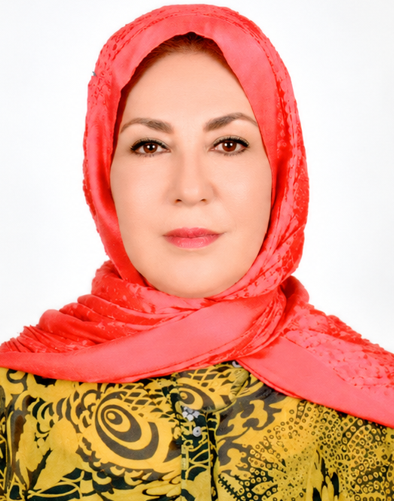
Bouthainah Khazal Al-Kaabi
Managing Partner, Green Coast Nurseries
Intelligent Micropropagation: Harnessing AI Research in Higher Education to Secure the Quality and Economic Value of Date Palm Tissue Culture in the Arab World
Dhiya Al-Jumeily OBE, Sulaf Assi, Bouthainah Khazal Al-Kaabi, and Azaam Al-Nuaimi
Liverpool John Moores University, Liverpool, UK · Green Coast Nurseries, United Arab Emirates
Abstract
Intelligent Micropropagation: Harnessing AI Research in Higher Education to Secure the Quality and Economic Value of Date Palm Tissue Culture in the Arab World
Dhiya Al-Jumeily OBE, Sulaf Assi, Bouthainah Khazal Al-Kaabi, and Azaam Al-Nuaimi
Liverpool John Moores University, Liverpool, UK · Green Coast Nurseries, United Arab Emirates
The date palm (Phoenix dactylifera L.) has long held a distinctive place in the agriculture, nutrition, and cultural heritage of the Arab world. In recent years, growing global awareness of healthy nutrition and the nutritional value of dates has further expanded the importance of this crop beyond its traditional role. Due to their high nutritional value, long shelf-life, ease of transportation, and ability to be consumed directly, dates serve as a valuable food source during emergencies and natural disasters.
At the same time, advances in modern agriculture and the increasing demand for elite date palm cultivars have created a growing need for the large-scale production of healthy, disease-free, and genetically authentic true-to-type planting material. Tissue culture has therefore become one of the most important approaches for meeting this demand.
Plant tissue culture has long been recognised as an important technology in agriculture for the mass production of high-quality plants. However, compared with many other plants and trees, date palm tissue culture is a highly complex, sensitive, and time-consuming process. Depending on the variety and production conditions, producing a marketable plant takes approximately two to four years.
This lengthy production cycle means that errors occurring during the early stages appear after considerable time and expense. More importantly, certain genetic variations or off-type plants do not become detectable until several years after planting in the field.
In such a complex and lengthy process, Artificial Intelligence (AI) provides a valuable decision-support tool for date palm producers. By analysing large volumes of production data, images, culture records, and genetic and molecular information, AI helps identifying potential problems at an early stage, optimising production processes, and reducing contamination, plant losses, and the risk of producing off-type plants.
This chapter reviews the state of the art and proposes a human-in-the-loop framework spanning the production chain, from explant selection to certified plantlet. The framework comprises: standardised, AI-ready capture of laboratory process, imaging and molecular data; stage-specific models for sterilisation, media optimisation, in vitro monitoring and acclimatisation; an early-warning approach to off-type risk that links culture history with genetic and epigenetic markers; validation, explainability and traceability requirements that enable regulators to trust AI outputs in certification.
Developed through a UK-UAE university-industry collaboration, the chapter positions universities as neutral data hubs, validation partners and trainers of a hybrid biotechnology-data science workforce. It proposes impact indicators such as cost per certified plantlet and losses avoided. It also shows how this model can support food security, cultivar conservation and knowledge-based economic diversification in the Arab region.
Biography
Bouthainah Khazal Al-Kaabi
Mrs. Bouthainah Khazal is the Managing Partner of Green Coast Nurseries, Fujairah, United Arab Emirates, and has more than three decades of experience in the development, propagation, and cultivation of date palms. Since its early years, Green Coast Nurseries has played a significant role in introducing and promoting tissue-cultured date palms in the United Arab Emirates. Through several years of cooperation with the UAE Ministry of Agriculture, Mrs. Khazal and Green Coast Nurseries contributed to increasing farmers’ awareness and confidence in tissue-culture technology, providing technical expertise and supporting its practical adoption across UAE farms. These efforts took place during an important period of agricultural development in the UAE under the vision and support of the late Sheikh Zayed bin Sultan Al Nahyan, whose commitment to agriculture and date palm development created a strong foundation for the successful introduction and adoption of modern agricultural technologies. Over the years, Green Coast Nurseries has expanded its expertise beyond the UAE and participated in date palm projects, technical collaborations, and agricultural initiatives in several countries, including Egypt, Iraq, India, and Thailand. Mrs. Khazal’s current focus is on integrating Green Coast Nurseries’ extensive practical experience in date palm cultivation and tissue culture with advanced scientific technologies, particularly genetic verification and artificial intelligence. Her work aims to enhance cultivar identification, strengthen True-to-Type assurance, improve quality control, and contribute to the development of reliable scientific standards for the future of the date palm industry.