Jordan
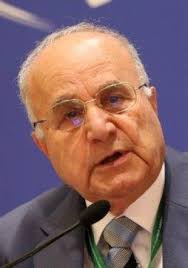
Adnan Badran
President, Arab Academy of Sciences
AI-Driven Economic Development: The Strategic Role of Arab Universities
Serene Badran and Adnan Badran
University of Sharjah, United Arab Emirates · University of Jordan, Amman, Jordan
Abstract
AI-Driven Economic Development: The Strategic Role of Arab Universities
Serene Badran and Adnan Badran
University of Sharjah, United Arab Emirates · University of Jordan, Amman, Jordan
The Arab world stands at an inflection point: artificial intelligence (AI) is restructuring global value chains, labor markets, and innovation systems, yet the region's higher education institutions remain underutilized as engines of knowledge-based economic growth. This paper examines how Arab universities can become strategic drivers of AI-driven economic development through creative research, institutional reform, and cross-sector collaboration. Drawing on international models, including East Asia's innovation ecosystems, Finland's research-led competitiveness strategy, and Gulf national AI plans, it identifies five interconnected pillars: (i) embedding AI as a research enabler across disciplines; (ii) building university–industry–government (triple-helix) partnerships; (iii) developing AI-ready human capital; (iv) establishing entrepreneurship and technology-transfer infrastructure; and (v) crafting governance frameworks that ensure responsible, culturally grounded AI integration. The paper argues that Arab universities must shift from knowledge-transmission institutions to knowledge-creation and commercialization actors, and that doing so requires coordinated investment, policy alignment, and regional cooperation. Actionable recommendations are offered for university leaders, governments, and regional bodies such as the Arab League Educational, Cultural and Scientific Organization (ALECSO).
Biography
Adnan Badran
Dr. Adnan Badran is a biologist, his early original research was the discovery of the mechanism of browning catalyzed by Polyphenol-oxidase and the substrate L-Dopamine and inhibited by the polymer Leucodelphinidin-tannin (Nature 206: 622-624). Another was the discovery of extending storage and shelf life of fruits by inhibiting the biogenesis of ethylene responsible of triggering climacteric rise in respiration, the ripening process, through understanding its interaction with O2 and CO2 (Patent, Ser. U.S. 3,450,543). This discovery has allowed shipping fresh food-fruits and vegetables across countries around the world. His current work now, is on alcoholic extraction of different cultivars of Seaweeds from the Red Sea to cure breast cancer cells. Badran was awarded an Honorary Doctorate from Sungkyunkwan University, Seoul (1981); an Honorary Doctorate in Science from Michigan State University, (2007); Honorary Doctorate in Business from Yarmouk University, Jordan (2014); the West Watkins distinguished Lectureship Award (2009) USA; the Hall of Fame Alumni Award from Oklahoma State University, USA; and the Honorary Professorship from L.N. Gumilev Eurasian National University Kazakhstan (2012). Also, he was awarded the Arab Thought Foundation Award for best Arab scientist in higher education research (2005); the TWAS Regional Prize for "Building Scientific Institutions" (2009); the World Education Asia award for Outstanding Contribution to Education (2011) and the Shoman award for Peer review of young Arab scientists. Badran was Prime Minister (2005), Minister of Agriculture and Minister of Education (1989) in Jordan. He was Senator and Chair of the Senate Committee on Science, Education and Culture (2006-2010). He served as Assistant Director General for Science and served as Deputy Director-General of UNESCO Paris, (1990-1998). He is the founding President of two public and two private universities. He is a Fellow and former vice-president of TWAS, and he is the president of Arab Academy of Sciences, and president of World Affairs Council, and served as president of the National Center for Curriculum Development and the National Center for Human Rights. Badran received his B.Sc from Oklahoma State University (1959), and Master then PhD from Michigan State University (1963), USA.