
Kuwait
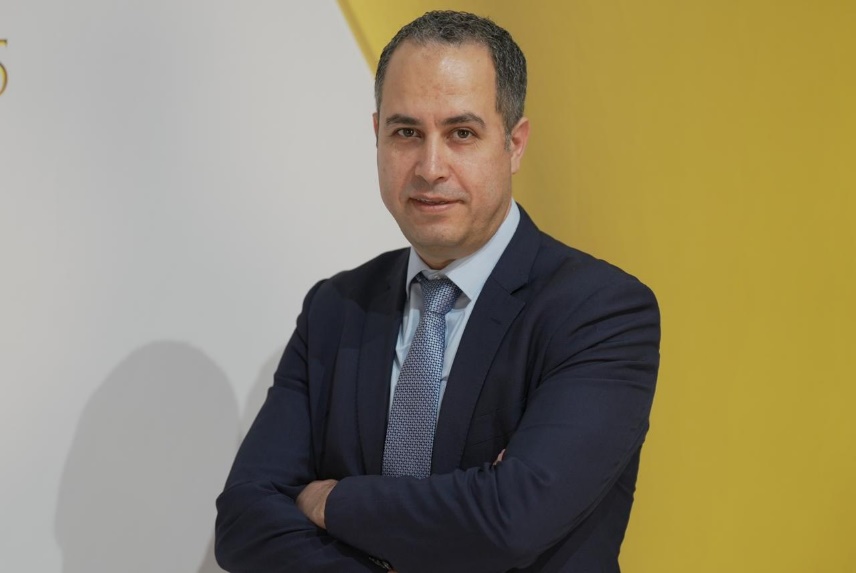
Zaher Abdel Baki
Associate Professor of Chemistry, American University of the Middle East
Evaluating AI Transformation in Arab Universities: A Theory-of-Change and Mixed-Methods Framework for Educational and Economic Impact
Zaher Abdel Baki
American University of the Middle East, Kuwait
Abstract
Evaluating AI Transformation in Arab Universities: A Theory-of-Change and Mixed-Methods Framework for Educational and Economic Impact
Zaher Abdel Baki
American University of the Middle East, Kuwait
Artificial intelligence is becoming a strategic priority for universities across the Arab world. However, institutional assessments of AI initiatives often focus on implementation activities, such as the number of digital tools introduced, staff trained, or students reached, rather than on whether these initiatives produce meaningful improvements in educational quality, organizational performance, graduate employability, and economic development. This paper applies a program evaluation perspective to propose a practical framework for assessing the value and effectiveness of AI transformation in higher education.
Drawing on principles of theory of change, logic model development, stakeholder engagement, evaluation design, mixed-methods inquiry, and utilization-focused evaluation, the paper presents a structured approach for connecting university AI investments with intended short-term, medium-term, and long-term outcomes. The framework distinguishes between inputs, activities, outputs, outcomes, and broader impacts. This distinction helps educational managers determine not only whether an AI initiative was implemented, but also how and under what conditions it contributes to institutional and national priorities.
The proposed evaluation model examines five domains: student learning and success, institutional operational efficiency, research and innovation, graduate employability, and societal and economic contribution. It combines quantitative indicators, including retention, completion, administrative processing time, employment outcomes, research partnerships, and technology transfer activity, with qualitative evidence from students, faculty, administrators, employers, and policymakers. The framework also incorporates formative evaluation to support improvement during implementation and summative evaluation to assess results after implementation. A certain focus is given to equity, data privacy, academic integrity, accessibility, and unintended consequences.
The paper argues that AI evaluation should move beyond simple attribution claims and use contribution-oriented analysis to understand the interaction between artificial intelligence, leadership, institutional capacity, policy, and contextual factors. The proposed framework can help educational managers make evidence-informed decisions about resource allocation, program improvement, quality assurance, and institutional strategy. It can also support policymakers in comparing AI initiatives and strengthening the contribution of Arab universities to inclusive, knowledge-based economic development.
Biography
Zaher Abdel Baki
Dr. Zaher Abdel Baki is an Associate Professor of Chemistry at the American University of the Middle East in Kuwait. He earned his PhD from the National Polytechnic Institute of Toulouse, France. His research focuses on green chemistry, nanomaterials, biomass conversion, wastewater treatment, and sustainable technologies. His work on glycerol valorization has resulted in four international patents and contributed to the development of eco-friendly processes for pollution control, renewable energy, and resource efficiency. With more than 30 scientific publications, Dr. Abdel Baki is committed to translating university research into scalable technologies, supporting innovation, technology transfer, and sustainable economic development.